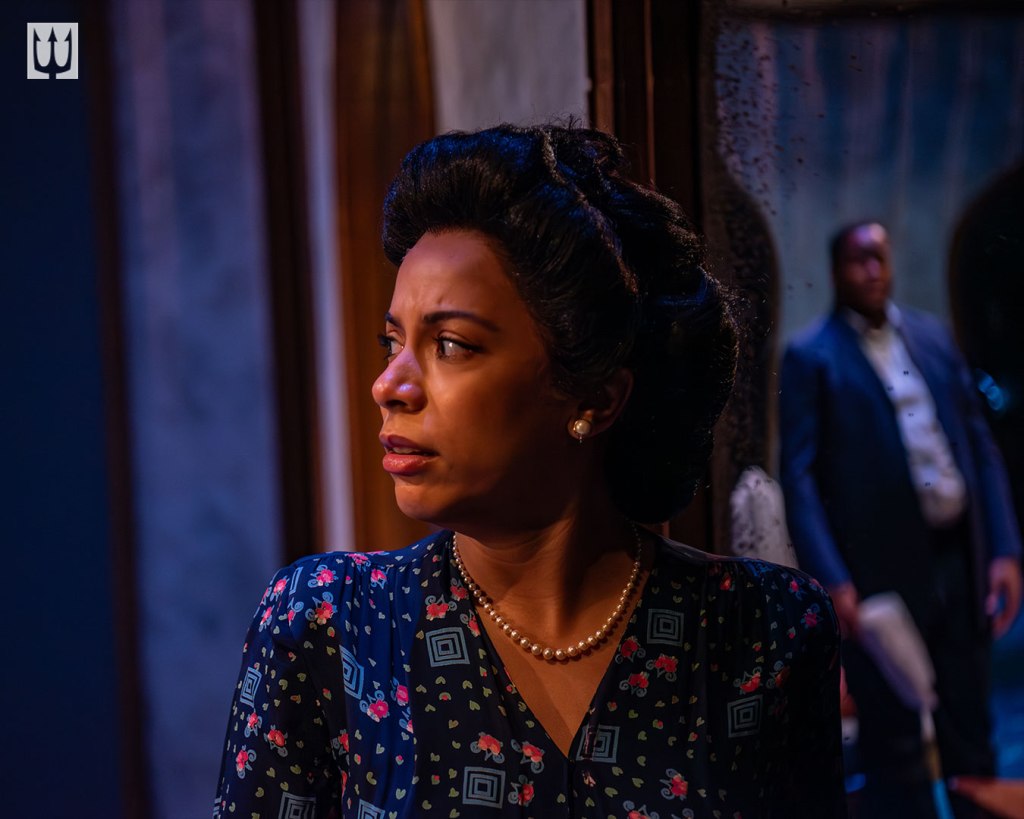
Controlled Damage is excellent, complex, passionate theatre about Halifax civil rights activist Viola Desmond.
First staged just before the pandemic, the two-hour play by Toronto writer Andrea Scott, returns in a new co-production by Neptune Theatre and the National Arts Centre (NAC), running just to Feb. 2 in Neptune’s intimate studio theatre.
While this story is sheathed in a glorious cloak of visual design and music, its power lies in an excellent ensemble; a tremendous, heart-breaking performance by Deborah Castrilli as Viola; a beautifully-constructed script and direction that is bold, insightful, rhythmic and imaginative by two-time Dora awardwinner Cherissa Richards.
It’s not surprising that Richards was assistant director on Fall On Your Knees, which also involved Neptune and the NAC.
Both shows are epic and deal with intense personal experience; both are complex and yet incredibly clear; both depict a whole community at different times and in different places simply telegraphed by a few choice set pieces and excellent costumes; both productions appear to have had money for a lot of actors, for time to think and experiment and for complex visual poetry in design.
Viola Desmond made history when she sat unknowingly in the whites-only section of the Roseland Theatre in New Glasgow in November, 1946. She was dragged by police from the theatre, spent a night in jail, received a fine and fought – unsuccessfully – to clear her name, though her case led to the end of racial segregation in Nova Scotia in 1954. Today her gravestone stands silently in the depths of winter in Camp Hill Cemetery in Halifax.
Scott brings this feisty, positive, passionate character completely to life with a crackling vitality and indomitable spirit, as played by Castrilli.
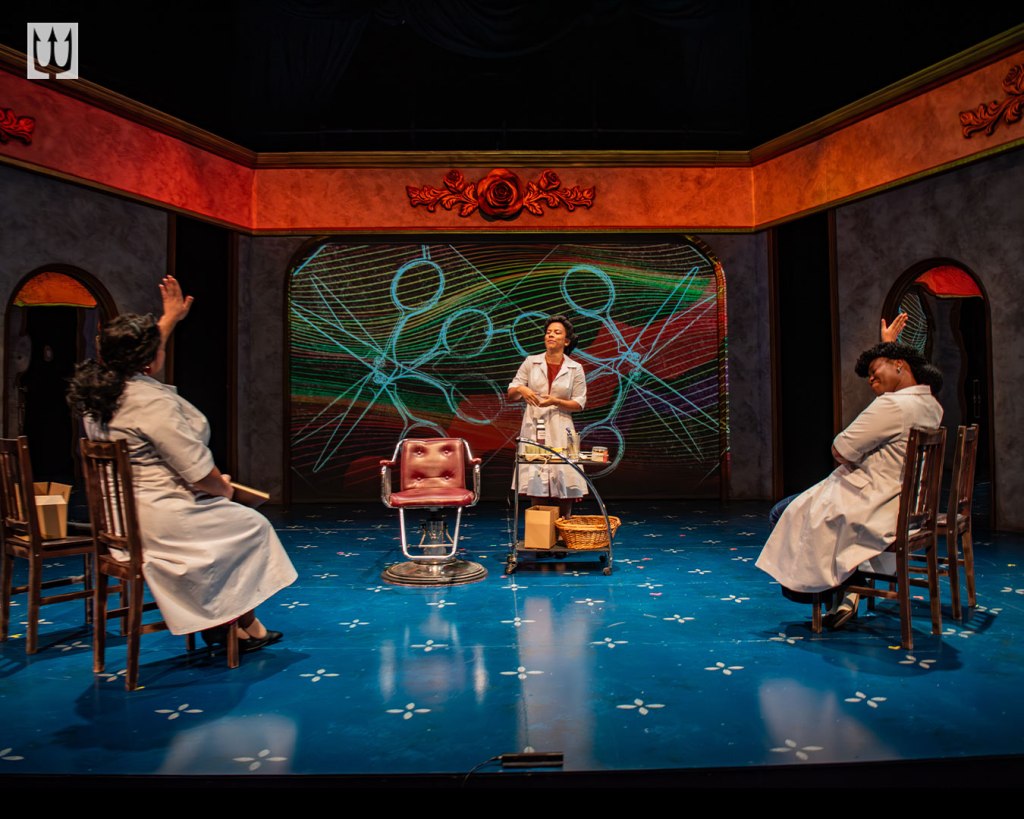
The drama contains all the fascinating details of Viola’s life – surviving the Halifax Explosion, teaching school, studying hairdressing, running a hair salon and a beauty product business, training African Nova Scotia students denied access to whites-only schools. More than a biography, the play is a celebration of the courage it takes for anyone to fight the status quo at a time of personal uncertainty and lack of support.
The director dedicates it to “all the fierce women of the world like Viola – claiming their space and breaking boundaries!”
(Mariann Budde, the American female bishop who provoked President Trump by simply advocating for mercy, might be the most up-to-date example.)
Controlled Damage is also about the complexities within racism; the most scalding judgment Viola receives is a racial insult from her husband, Jack, a successful Halifax barber. Matthew G. Brown portrays him as a loving but traditional man who believes a wife’s place is in the kitchen. Brown is a physically larger than the petite Castrilli – Viola was notably petite. Jack is not violent but he is suspicious from the moment he comes on stage talking about babies and dinner.
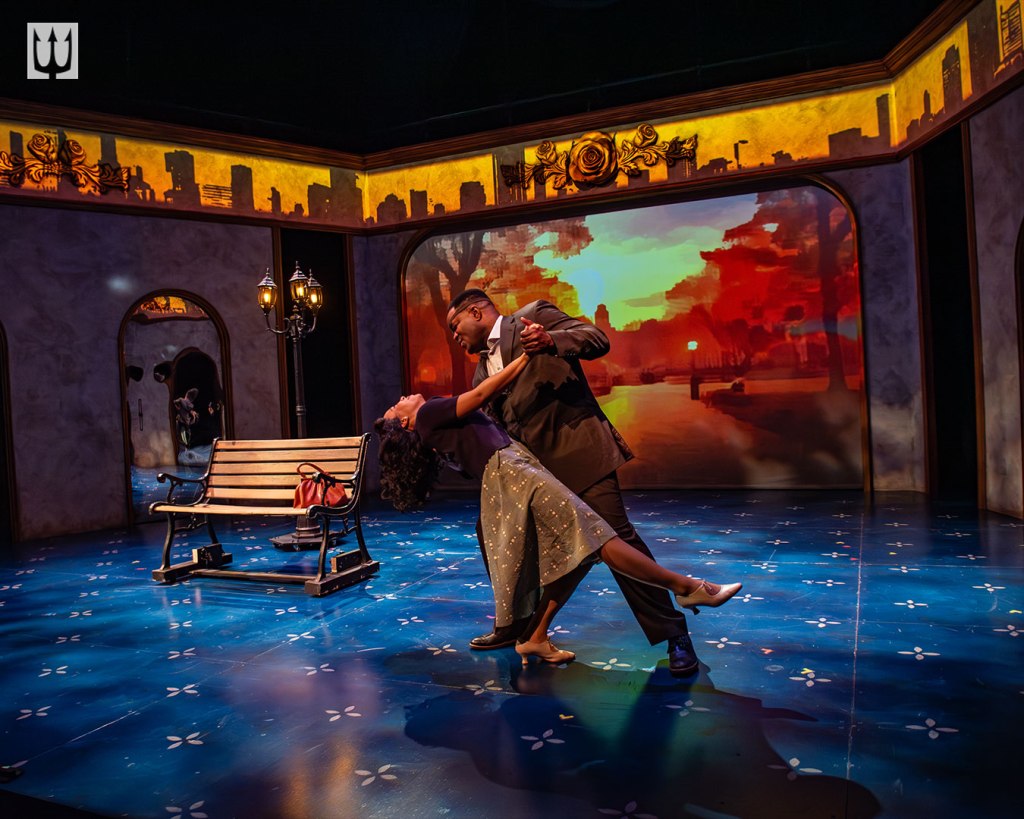
As a “mixed race” woman, Viola is targeted by her own community for not understanding the black experience in Nova Scotia and for being a troublemaker.
There’s a wonderful scene of three black men drinking liquor and playing cards. Two consider Desmond to be “uppity” and wrong to rock the boat of established race relations in “Scotia.” A third disagrees and praises her for trying to change a longstanding system of segregation.
Controlled Damage is both epic and realistic in its storytelling and design. It starts with the Halifax Explosion, the jarring hot flashing light repeated later on as flashes from journalists’ cameras.
There is a carved rose for the Roseland Theatre at the top centre of the stage, which is a movie theatre screen. This beautiful rose, equated with Viola herself, is a focal point many times as
Leigh Ann Vardy’s exquisite lighting changes it from bronze to a passionate red. The projections by Halifax designer Aaron Collier are brilliant and seamless – many movie-themed – and the decision at one point to flood the stage with projections of brilliantly coloured flowers is breath-taking.
The cast is uniformly strong and a mix of Nova Scotian and out-of-province actors; it’s always great to see Jeremiah Sparks on stage. He is so relaxed and accomplished in a variety of roles from Rev. William Pearley Oliver, who supported Viola, to the drunken card-playing critic.
Also from Nova Scotia is Riel Reddick-Stevens bringing great energy and mischief to Viola’s bouncy, lifelong friend Rose Ried, and to several roles including the beautifully dressed and polished Pearleen Oliver.
The ensemble, all playing multiple roles apart from Castrilli, includes Cameron Grant, who was in the Grand Theatre production of Controlled Damage; Ontario actor J.D. Leslie, Millbrook First Nation actor, director and playwright Lisa Nasson, Cape Breton-born actor Julie Martell as a spunky, comical white woman in the innocent, early days of Viola’s salon and Andrew Shaver, both the white racist school official and the Roseland manager, who tells his side of the story in a New Glasgow accent egged on by his irritating, tea-drinking mother.
Like Fall On Your Knees, music is used to accent different cultures and to hit emotional and thematic notes in beautiful, brief ensemble songs. Fiddle player Sarah Frank, of the awardwinning bluegrass duo The Bombadils, is key to this production. She moves all over the exposed catwalk as if she were peering into this world, punctuating it with beautiful music and lifting it into song.
Set and costume designer Rachel Forbes, who did the set and costumes for Shauntay Grant’s The Bridge, brings the time period alive and fashions Viola and other characters in clothing that has thematic revelance as well as signalling character.
Viola is usually richly dressed in bright colours and fashionable business wear with elegant period coats. In the last scene she is dressed in a plain, brown dress while her friend Rose is in pink – such a visual sign of how their lives and spirits have diverged.
Lying next to Viola in Camp Hill Cemetery is her sister Wanda Robson who succeeded in having her sister posthumously pardoned in the Nova Scotia Legislature in 2010. Wanda’s own story of strength, resilience and tenacity is also very interesting and would make a great companion piece to Controlled Damage.
Controlled Damage runs two hours and 15 minutes including an intermission; it is recommended for ages 12 and up; there is a content advisory: “As a re-imagining of the life of an important civil rights icon in Canada, this play confronts difficult yet necessary truths about racism and discrimination that have been a part of our shared history. Due to the realities of this historical context, the play does not censor offensive, demeaning, and racist language, including the n-word and other racial slurs.”
For tickets, from $33 to $80, go to Neptune Theatre.
- All the world’s a wheel: ceramic art in Nova Scotia
- Little Shop of Horrors: fun to visit, stay away from the plant!
Categories: Uncategorized
 NS reviews